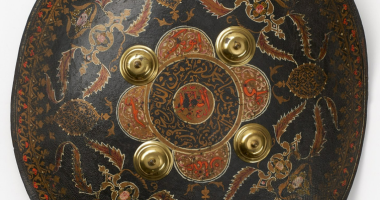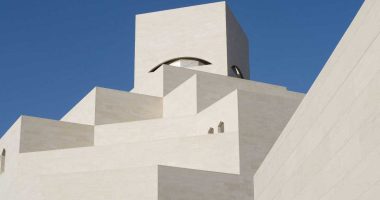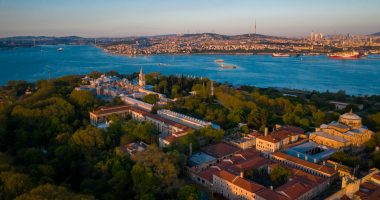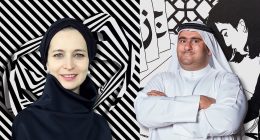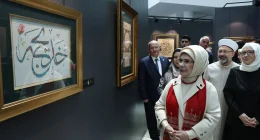
The Musée d’Art et de Culture Soufis MTO is situated in a restored 19th-century mansion on the Seine, facing the Île des Impressionistes. The museum gathers hundreds of artifacts from the Maktab Tarighat Oveyssi (MTO) Shahmaghsoudi School of Islamic Sufism, a non-profit organization with a global presence across six continents. The museum was primarily funded through support from two related organizations—the American Friends and the Canadian Friends of Sufi Arts, Culture, and Knowledge. Alexandra Baudelot, the museum’s director, notes that their long-term strategy is “to develop an economic model that is based both on public and private funding.”
Key pieces from the collection include:
- Kashkuls: Intricately decorated bowls that symbolize “the renunciation of material ties and a readiness to receive divine knowledge,” as Baudelot explains.
- 20th-century Khirqa: A velvet cloak in purple and yellow with gold embroidery, presented to the current MTO master during a formal ceremony. As Baudelot states, “When a master gives his disciple a cloak, it means that he is now the master.”
The Museum’s Objective
A central goal of the museum is to demonstrate the “universality” of Sufism and its modern-day relevance. Baudelot emphasizes that the museum’s programs aim to place contemporary art in conversation with the traditional collection, beginning with an exhibition featuring seven contemporary artists.
Highlighted artists include:
- Younes Rahmoun (Morocco): Deeply influenced by Sufi teachings since the 1990s, Rahmoun’s art reflects themes of numbers, repetition, and light, common in both his practice and Sufi philosophy. His journey began with an interest in Zen Buddhism, which led him to Rumi and the philosopher-mystic Ibn Arabi.
- Pinaree Sanpitak (Bangkok): Known for exploring themes of motherhood and the female body, Sanpitak’s work often features her recurring “breast stupa” motif, which bridges women’s anatomy with Buddhist commemorative monuments. Drawn to the museum’s “open-minded spirituality,” she presents three new paintings inspired by the kashkuls, stating, “Sufis carry them around, but they don’t put anything in them. They are a place for receiving and giving, and that connects with my practice.”
Her works depict vessel-like shapes or natural forms, surrounded by a rich red hue, offering a sense of open-ended spirituality.
Additional Features
The museum also houses:
- Archival research library: A resource for in-depth exploration of Sufi culture and history.
- Persian garden: Baudelot highlights that many of the plants featured in the garden have deep connections to Sufism, being present in Sufi poetry, literature, and medical treatises.
A Timely Project
The museum’s opening coincides with a politically charged period for France’s Muslim community, the largest in Europe, following a surge in support for the far-right Rassemblement National (RN) party. RN’s leader, Jordan Bardella, has made controversial statements about the “Islamisation” of neighborhoods and promises to ban certain types of veils if elected.
Baudelot believes this makes the museum’s mission even more critical: “These problems are related to not knowing, so it’s very important to create places where we are able to speak about different cultures and share knowledge. I think it’s more important than ever to have this kind of project because it really links cultures together and can create some bridges.”
Reported by: The Art Newspaper