
Last year, following the October 7 attack on Israel by Hamas, the Frick Pittsburgh delayed the launch of its exhibit “Treasured Ornament: 10 Centuries of Islamic Art.” This decision left many puzzled, as the museum admitted that no complaints had been lodged against the exhibit, which featured historical artwork unconnected to current political conflicts. Some critics suggested that the postponement risked associating all Islamic culture with terrorism.
The Frick, however, explained that the delay allowed them to enhance the exhibit by offering a more comprehensive historical context and incorporating local connections and programming. After extensive collaboration with scholars and community partners, the Frick is now ready to unveil “Treasured Ornament” on Saturday, August 17.
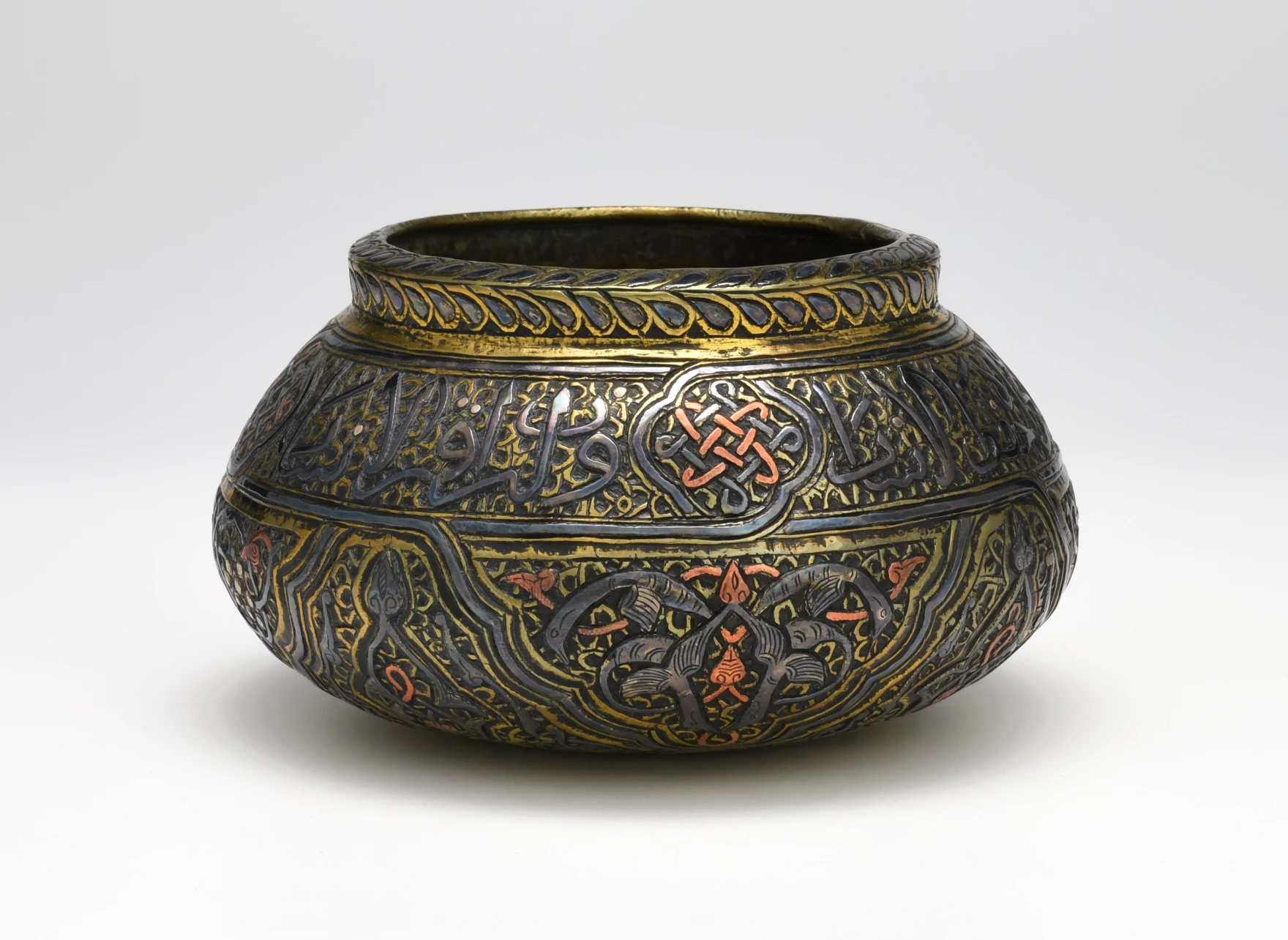
The exhibit will showcase the same 43 meticulously crafted items, including ceramic and metal vessels, textiles, weaponry, and more, spanning centuries and originating from the Middle East and beyond. Notable pieces include a glass bottle from the 7th or 8th century and a lamp from 12th or 13th century Iran. These items, many of which were originally functional household objects like bowls, dishes, prayer rugs, and scientific instruments such as an astrolabe, will now be displayed with more thoughtfully designed signage and a variety of programs, including live music, art-making, and calligraphy workshops.
Dawn Brean, the Frick’s chief curator, stated, “The biggest change that we have made is to slow down and be more intentional with our exhibition text.”
The exhibit has an interesting background. Except for one item from the Frick’s collection, all the pieces on display were selected from the 400-item Touma Near Eastern Collection at West Virginia’s Huntington Museum of Art. This collection was amassed by Joseph and Omayma Touma after they emigrated from Syria to the U.S. in the 1960s and later donated to the Huntington.
The exhibition was curated by the Huntington’s Christopher Hatten, with Brean supervising the Pittsburgh presentation. The revamped exhibit also benefited from the expertise of two University of Pittsburgh professors: Sahar S. Hosseini, who specializes in the history of art and architecture, and Yasmine Flodin-Ali, who focuses on modern Islam and race.
Brean acknowledged that the additional efforts highlighted both the exhibit’s limitations and its significance. She remarked that “Islamic art” is “a very imperfect term” since it could refer to art produced in a society under Muslim rule or in a society with a Muslim majority. Given Islam’s wide geographical spread, the objects could originate from anywhere between Spain, Northern Africa, the Middle East, or Indonesia.
Flodin-Ali further pointed out that many of the objects served no religious purpose. One of Brean’s favorite items in the exhibit is a small silver bowl from the sixth century, which actually predates Islam.